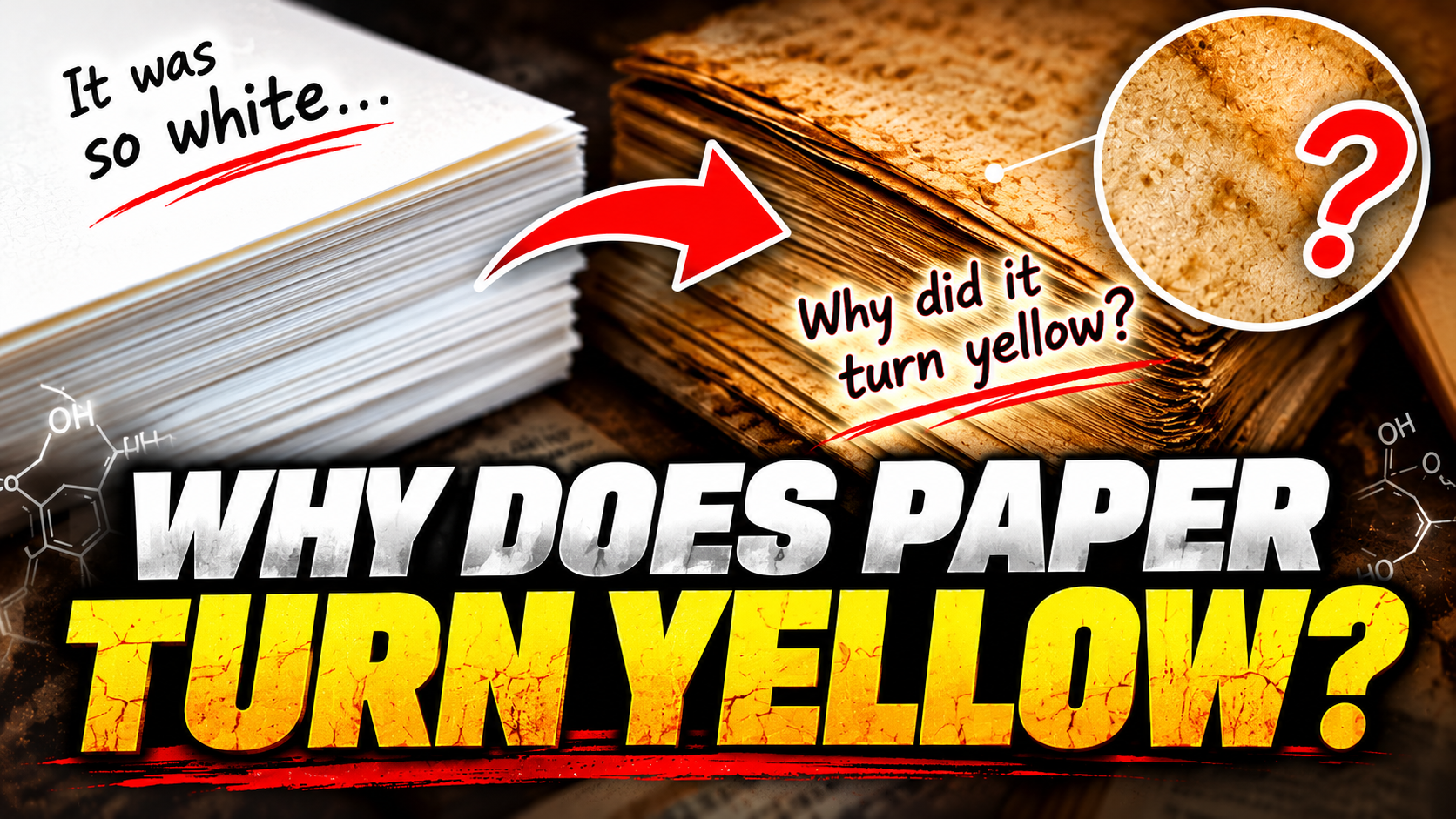
Have you ever opened an old book, newspaper, or document and noticed that its pages have turned yellow or brown? This is a common phenomenon, especially in newspapers and books that have been stored for many years.
Some papers develop yellow edges, while others become discolored across the entire surface. In certain cases, the paper also becomes brittle and tears easily.
So, why does paper turn yellow over time?
The answer lies in the chemical composition of paper and its interaction with oxygen, light, heat, and moisture. As paper ages, its components undergo chemical changes that can affect both its color and physical strength.
In this article, we will explore the science behind paper yellowing, the causes of paper deterioration, and practical ways to preserve old books and documents.
1. What Is Paper Made Of?
To understand why paper turns yellow, we first need to examine its basic composition.
Most conventional paper is made from wood pulp, which contains cellulose fibers. Depending on how the pulp is produced, it may also contain hemicellulose, lignin, and other natural substances.
Cellulose is the primary structural component of paper. Its fibers bond together to form the sheets we use for writing, printing, and packaging.
Lignin, on the other hand, is a natural polymer found in plant cell walls. It helps provide rigidity and strength to trees and other plants.
However, lignin can undergo chemical changes when exposed to light and oxygen. These reactions can contribute to the yellowing of paper.
Paper made from mechanical wood pulp generally contains more lignin than paper made from highly purified chemical pulp. As a result, it may discolor more quickly under similar storage conditions.
The exact composition varies depending on the type of paper and its manufacturing process.
2. Oxidation: One of the Main Causes of Paper Yellowing
One of the major reasons paper turns yellow is oxidation.
Oxidation is a chemical process involving the loss of electrons. In the context of paper aging, it often involves reactions with oxygen or other oxidizing substances.
Over time, certain components of paper react with oxygen in the surrounding air. Exposure to light can also accelerate some of these chemical reactions.
These changes may create or modify chemical structures known as chromophores.
Chromophores absorb particular wavelengths of visible light, which can cause paper to appear yellow or brown.
Lignin oxidation and light-induced chemical reactions are especially important in the yellowing of many wood-based papers.
Changes involving cellulose and other organic components may also contribute to discoloration.
Because these reactions usually develop gradually, noticeable yellowing may take years or decades to appear.
However, the rate of discoloration depends on the paper’s composition and the conditions in which it is stored.
3. How Does Paper Acidity Affect Aging?
Another important factor in paper deterioration is acidity.
Some papers contain acidic substances left over from manufacturing processes. Acids can also form as paper components undergo chemical changes over time.
In acidic conditions, cellulose chains become more vulnerable to a reaction called acid-catalyzed hydrolysis.
This process breaks chemical bonds within cellulose molecules, reducing their average chain length and potentially weakening the paper.
As deterioration progresses, paper may become brittle, fragile, and more likely to tear.
However, paper acidity and yellowing are not exactly the same phenomenon.
Yellowing refers to changes in paper color, while acid-related cellulose degradation is strongly associated with the loss of physical strength.
Although these processes can occur together, they do not necessarily progress at the same rate.
Therefore, yellow paper is not always severely damaged, and paper that still appears relatively white may already have experienced some chemical deterioration.
4. Why Do Sunlight and Heat Accelerate Paper Discoloration?
Paper exposed to sunlight often changes color faster than paper stored in a dark environment.
Sunlight contains ultraviolet and visible radiation, both of which can contribute to photochemical reactions in paper.
These reactions may alter lignin and other components, producing substances that absorb visible light and contribute to yellowing.
Temperature also plays an important role.
In general, higher temperatures can increase the rates of chemical reactions involved in paper aging.
For example, two identical sheets of paper may develop different appearances if one is stored in a cool, dark cabinet and the other is kept near a sunny window.
The sheet exposed to more light and heat may experience faster discoloration.
For this reason, limiting unnecessary light exposure and avoiding excessive heat are important principles of paper preservation.
5. Why Do Old Newspapers Turn Yellow Faster Than Many Books?
Old newspapers are particularly well known for their yellow and brittle pages.
One reason is the type of pulp traditionally used to manufacture newsprint.
Many older newspapers were printed on paper containing substantial amounts of mechanical wood pulp.
Unlike highly purified chemical pulp, mechanical pulp retains much of the wood’s original lignin.
Because lignin can react with light and oxygen, paper containing relatively high amounts of it may yellow more readily.
In contrast, papers designed for long-term preservation may be manufactured using lower-lignin fibers and processes intended to improve chemical stability.
Some archival papers also contain an alkaline reserve to help neutralize acids that may develop over time.
Nevertheless, not all newspapers or books are made from the same materials.
Their aging behavior depends on manufacturing methods, chemical composition, environmental exposure, and storage history.
6. How to Prevent Paper From Turning Yellow
Once paper has undergone chemical discoloration, restoring its original appearance is often difficult, especially without professional conservation treatment.
Therefore, prevention is generally more practical than attempting to reverse the damage.
Keep Paper Away From Direct Sunlight
Store important books and documents away from windows and direct sunlight.
Reducing prolonged exposure to strong artificial lighting can also help limit light-related deterioration.
Maintain Stable Temperature and Humidity
Hot and humid environments can accelerate certain forms of chemical deterioration and increase the risk of mold growth.
For ordinary household storage, choose a relatively cool, dry location with minimal fluctuations in temperature and humidity.
Avoid storing valuable paper materials in damp basements, poorly ventilated spaces, or areas exposed to excessive heat.
Use Appropriate Archival Storage Materials
Important documents can be placed in preservation-quality folders, sleeves, or storage boxes.
When selecting archival materials, consider both their chemical stability and their compatibility with the items being stored.
Photographic materials, for example, may require different storage considerations from ordinary paper documents.
Handle Fragile Paper Carefully
Old paper may become brittle as its cellulose structure deteriorates.
Avoid repeatedly folding, bending, or forcing open fragile documents.
If a historically valuable book or document is severely damaged, consulting a professional conservator is safer than attempting repairs at home.
7. Can Yellow Paper Become White Again?
It may seem tempting to use household bleach or cleaning products to restore yellow paper.
However, these methods can cause irreversible damage.
Bleaching agents may weaken cellulose fibers, alter inks, or leave harmful chemical residues.
Professional paper conservators sometimes consider specialized cleaning or chemical treatments, but only after evaluating the material and its condition.
The purpose of conservation is not simply to make old paper look new.
Preserving the original material, historical information, and structural integrity is often more important than removing every sign of aging.
For valuable documents, professional assessment is the safest approach.
8. Frequently Asked Questions About Paper Yellowing
Can airtight storage completely prevent paper from turning yellow?
No. Airtight storage may reduce exposure to some external factors, but it cannot completely stop chemical reactions within paper.
Improperly sealed storage can also trap moisture and create unfavorable conditions.
Does modern white printer paper eventually turn yellow?
Yes, it can. However, the rate of yellowing depends on the paper’s fiber composition, additives, acidity, and storage conditions.
Does yellow paper always mean the paper is damaged?
Not necessarily. Yellowing indicates a change in appearance, but it does not automatically mean the paper has lost most of its strength.
Physical condition, brittleness, mold growth, and other signs of deterioration should also be considered.
Is acid-free paper guaranteed to last forever?
No. Acid-free paper is generally designed to reduce certain risks associated with acidic deterioration, but it can still be affected by light, heat, moisture, pollutants, and handling.
9. Conclusion: Paper Yellowing Is a Result of Chemical Aging
Paper turns yellow over time because its chemical components gradually change as they interact with the surrounding environment.
Oxidation, lignin-related reactions, and light-induced chemical changes can contribute to discoloration.
Meanwhile, acidic conditions can accelerate the breakdown of cellulose and reduce the paper’s physical strength.
Although paper aging cannot be completely prevented, appropriate storage can help slow deterioration.
Keeping documents away from direct sunlight, maintaining stable environmental conditions, and using suitable preservation materials are practical ways to protect books and paper records.
Understanding why paper turns yellow also helps explain why historical documents require careful conservation and why the materials used in papermaking matter for long-term preservation.
References and Further Reading
Library of Congress — Preservation and Care of Collections
National Archives and Records Administration (NARA) — Preservation of Records
Northeast Document Conservation Center (NEDCC) — Preservation Resources
Canadian Conservation Institute — Conservation and Preventive Care